Our Process
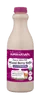
Our organic products are among the most supremely natural and nutritious dairy products on the market. That’s because we believe in doing less—not more—when it comes to our food. Our milk comes from small, sustainable farms with average herds of 35 cows. We process the milk at the lowest temperature possible, allowing us to deliver our products in their most natural state. That means Kalona SuperNatural™ products not only taste fresh, they are fresh.
Our supremely natural process means our products taste different and look different. Because our milk is non-homogenized the cream naturally floats to the top and thickens. This is the true sign of milk in its natural state. The cream naturally separates and rises to the top, allowing customers to skim it off or shake it into our milk, yogurt, cottage cheese, half ‘n half, buttermilk, and more. This cream is rich in vitamins and minerals, and it’s easier on the digestion system.
Organic
You might find yourself asking, why should I buy organic? At Kalona SuperNatural™, we like to think of organics in terms of creating simple, delicious products that are good for you. The small family farmers we work with do not use chemicals, chemical fertilizers, herbicides, or pesticides. In fact, many of the Amish and Mennonite farms that produce Kalona SuperNatural™ products have never been touched by chemicals and fertilizers. The result: high quality products that have exceptional taste and are better for you.
We also support the organic movement by working with local and regional farmers. By bringing small farmers’ products to local markets, we use less fuel in the distribution process and more of the money from the sale goes back to the farms and into the community.
The truth is that some organics companies are interested in producing trendy organic products. Not Kalona SuperNatural™. We are 100 percent focused on finding products that create a different type of excitement—the excitement our customers feel when they discover superior products produced the way nature intended. Now that’s something to cheer about.
Kalona SuperNatural™ also supports sustainable farming practices. The Kalona SuperNatural™ family—from our yogurt and cottage cheese to our produce and dairy farmers and everyone in-between—is focused on preserving the land for future generations. Together, we are working to sustain and improve the health and vitality of the entire farm environment: soil, water, air, plants, animals, and people.
Grade A
We use Grade A milk in all of our products. Our Grade A milk has substantially more nutrients than conventional milk and it is much fresher when it reaches the grocery shelf.
Non-Homogenized
We do not homogenize our milk, preferring instead to leave it in its natural form–a combination of nonfat milk and cream. Homogenization, developed around 1900 in France, is a process in which hot milk is pumped through very small nozzles at high pressure, creating turbulent pressure that tears the fat globules into tiny particles, evenly dispersing them throughout the milk. While homogenization blends milk, it makes milk taste bland. Cream left in its whole form (globules) allows a natural creamy taste that is lost when it is broken down through homogenization. The cream in non-homogenized milk will rise to the top because it is lighter than the nonfat milk from which it separates. The cream at the top is a forgotten treat that kids and adults in earlier generations looked forward to when the milkman left milk on their front porch.
Many customers say they like how in one way our milk feels lighter in the mouth, but it also has a full, creamy flavor. Customers also say our milk is cleaner on their palate.
Grass Fed
Over the past few decades many studies have revealed that pasture-feeding is much healthier for the cows and for the consumer.
Greener Pastures: How Grass-fed Beef and Milk Contribute to Health Eating by Kate Clancy is the first study to synthesize the findings of virtually every English-language study (25 were chosen for analysis) comparing the amounts of total fats, saturated fats, omega-3 fatty acids, and Conjugated Linoleic Acid (CLA) in both pasture-raised and conventionally raised beef and dairy cattle. The report also combined analyses of the nutrition, environmental, and public health benefits of grass-based farming techniques. The report found that grass-fed milk contains higher levels of omega-3 fatty acids, the so-called beneficial fats. Grass-fed milk tends to be higher in an omega-3 fatty acid called alpha-linolenic acid (ALA) that scientists have demonstrated reduces the risk of heart disease. And grass-fed milk also is higher in CLA, a fatty acid shown in animal studies to protect against cancer. CLA was discovered in 1978 by Michael W. Pariza at the University of Wisconsin while looking for mutagen formations in meat during cooking. The most abundant source of natural CLA is the meat and dairy products of grass-fed animals. Research conducted since 1999 shows that grazing animals have from 3 to 5 times more CLA than animals fattened on grain in a feedlot. Simply switching from grain-fed to grass-fed products can greatly increase your intake of CLA.
Vat Pasteurized
Pasteurization is a mandated production method for milks in the United States where heat is applied to raw milk to decrease the possibility of food-borne illness and to increase shelf life. Kalona SuperNatural™ uses a process called VAT pasteurization, where a fixed volume of milk in a vat is slowly agitated at 145 degrees Fahrenheit—this process has a uniquely negligible effect on the pure flavor of the milk. Our end product is as close as pasteurized milk can get to farm fresh flavor. Our Creamery also chooses the VAT process because we believe its lower temperature allows milk to retain more of its nutritional value than other methods of pasteurization (industrial-scale milk operations heat their milk to 171 degrees or higher, Fahrenheit, HTST method, and from 265-300 degrees, Fahrenheit, UHT method). The difference is very easy to understand; overcooked food loses flavor and nutrients. A well known example of the impact cooking has on food is its effect on vegetables. Raw or gently cooked vegetables have more flavor and nutrients than overcooked vegetables. We believe the same is likely true for milk. Most milk available today is pasteurized at temperatures significantly higher than 145 degrees Fahrenheit. By doing this, dairies sacrifice the fresh flavor and nutritional value of milk for a longer-than-natural shelf life.
No Added Hormones
Our milk contains no added hormones and comes from cows that are all vegetarian fed with non-GMO feed. The result of these processes means customers get the freshest and most natural milk that can be sold in a store. It is exactly what natural food consumers and those looking for healthy food choices for their families are hoping to find.
Cream Top
Because our milk is non-homogenized the cream naturally floats to the top and thickens. This is the true sign of milk in its natural state. The cream naturally separates and rises to the top, allowing customers to skim it off or shake it into our milk, yogurt, cottage cheese, half ‘n half, buttermilk, and more. This cream is rich in vitamins and minerals, and it’s easier on the digestion system.
Small Family Farms
All of our products come from small farms in the Midwest. In fact, they largely come from small, Amish / Mennonite family farms where the average daily herd is 35 cows and where most of the work is still done by hand. Many of these farms—most of which are on about 90 tillable acres—have been in the same family for 150 years and have never been touched by chemical herbicides or pesticides.
Kalona SuperNatural™ is committed to helping small farmers make organic farming a viable lifestyle. We strive to keep our products local and to ensure a fair and stable pay price. But our farmers tell us the biggest advantage to working with Kalona SuperNatural™ is that they can focus on working in the fields instead of worrying about sales and marketing. By spending more time in the field, our farmers are able to increase their level of production, which is essential to the success of any small farmer.